Sleep Comfort & Bedding
How Sleep and Beyond Uses Wool for Balanced Nighttime Comfort
Wool has a quietly distinctive role in bedding: it can feel soft and cushioning while helping manage warmth and moisture. Here’s what Sleep and Beyond’s washable wool pillows can tell us about comfort, care, and choosing a fill that suits your seasons and sleep preferences.
A different kind of pillow feel
“Soft” means something different from one pillow to the next. Down often compresses with an airy, cloudlike give. Feather blends may feel denser and more responsive. Synthetic fills can be engineered for a familiar loft, consistent shape, or straightforward washing. Wool occupies its own middle ground: its fibers form a springy, gentle cushion that can feel substantial without the slick, uniform sensation some people associate with manufactured fill.
That tactile quality matters because a pillow is not simply a decorative layer beneath the head. It is part of the sleep environment, in contact with the face and neck for hours at a time. A fill that feels agreeable, stays comfortable through the night, and suits a sleeper’s preferred loft may make the bedroom feel more inviting. But no material is universally best. Comfort depends on the pillow’s construction, the sleeper’s position and proportions, personal temperature preferences, and the rest of the bedding.
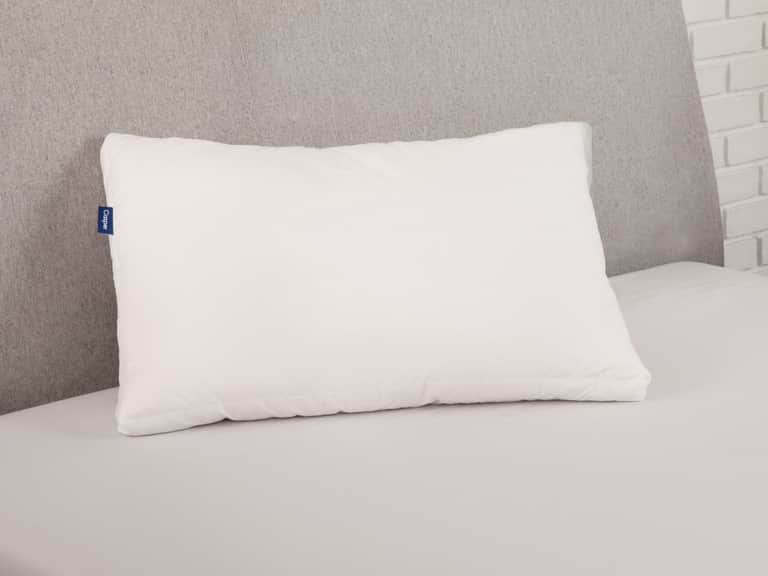
Sleep and Beyond’s wool designs offer a practical way to understand this material beyond its reputation as a warm winter fiber. The company’s MyWool Pillow is described as filled with washable wool and surrounded by natural cotton percale. The listing also characterizes wool as a temperature-regulating fill intended for year-round comfort. Those details provide a useful starting point—but the most important question remains personal: does the pillow feel supportive and comfortable for you?
What wool may bring to a night’s rest
Wool fibers are naturally structured, with a crimp that contributes to resilience and a soft, springy feel. In a pillow, that structure can help the filling resist the flat, compacted sensation some sleepers dislike. A wool pillow may feel more textured and gently buoyant than a down pillow, which tends to compress readily, or a smooth synthetic fill that can have a more uniform feel. These are broad tendencies, not guarantees: fill preparation, amount, chamber design, and shell fabric all affect the final result.
Wool is also valued for its interaction with warmth and moisture. Rather than treating temperature regulation as a promise that a pillow will make every sleeper cool, it is more useful to think of wool as one part of a system that may help moderate how the bedding feels. The pillow’s fabric, the room climate, the sleeper’s own warmth, and nearby blankets all play a part. A material that feels comfortable to one person can feel too warm, too firm, or simply unfamiliar to another.
Moisture management is another reason wool appears in bedding. During sleep, people naturally release moisture, and the way bedding handles it can influence whether the sleep surface feels clammy or comfortable. Wool’s fiber structure can take up some moisture vapor while still feeling relatively dry to the touch. That property may contribute to a balanced sensation, but it should not be mistaken for a substitute for laundering, ventilation, or addressing persistent sweating.
For readers comparing materials, the distinction is not “natural versus artificial” or “warm versus cool.” It is how a particular pillow behaves in daily use. Wool’s springiness, down’s compressible softness, feather fill’s more structured feel, and synthetic fill’s engineered consistency can each suit different preferences. A helpful comparison begins with the sensation you want—soft and yielding, gently resilient, or more consistently supportive—and then considers care and construction.
How Sleep and Beyond’s construction shapes comfort
The MyWool Pillow is described as containing 100% washable wool, with a 100% natural cotton percale cover. That combination places two materials with different jobs in the same design: wool provides the cushioning fill, while cotton forms the fabric closest to the sleeper. Percale is a plain-weave cotton fabric commonly associated with a crisp, breathable hand, although the feel of any particular shell depends on its yarn, finish, and construction.
The product information presents wool as a fill that offers a soft cradle for the head and neck without clumps and bumps. That description speaks to an important practical question: how evenly does a pillow settle under pressure? If the fill shifts into hard spots or develops uneven lumps, a sleeper may find it difficult to maintain a comfortable position. A resilient fill may help preserve a more even surface, but pillow shape and filling distribution still deserve attention over time.
Wool’s character can also make it a useful option for people who like natural fibers but do not want the especially airy, easily compressed sensation of down. At the same time, it may not feel as smooth or uniform as some down-alternative pillows. There is no need to treat those differences as a ranking. They are simply different responses beneath the head. A pillow that feels luxurious to one sleeper may feel too yielding or too lofty to another.
Because the product listing emphasizes washability, the MyWool Pillow may appeal to people who want a care routine that includes washing the pillow itself. However, “washable” should never be taken to mean that every part can be cleaned in any way or that frequent washing is beneficial. Check the current care label before laundering, including the recommended water temperature, cycle, detergent, and drying method. Follow the instructions for the exact item in hand, since care details can vary among versions and materials.
Temperature regulation without overpromising
Temperature is a common source of nighttime discomfort, but it is rarely controlled by one item alone. Room conditions, pajamas, mattress materials, blankets, humidity, and individual physiology all contribute to how warm or cool someone feels. A pillow can influence the immediate microclimate around the head and face, yet it cannot guarantee a particular sleep temperature for every person.
Wool is often described as helping regulate temperature because its fibers interact with both warmth and moisture. In everyday terms, that can mean a fill that feels comfortable across a range of conditions rather than one that is designed only for a strongly cooling or heavily insulating sensation. The Sleep and Beyond listing presents its wool pillow as suitable for year-round use. That is a useful indication of intended versatility, not a guarantee that every sleeper will find it equally comfortable in every season.
In colder weather, some people appreciate a pillow that feels cozy but does not add the heavy, dense sensation they associate with certain thick fills. During warmer months, a breathable cotton shell and an appropriate room setup may help prevent the bed from feeling stuffy. Still, if you sleep hot, consider the entire sleep system: keep bedding layers adjustable, use breathable sleepwear, and make the bedroom comfortable for your needs. A wool pillow can be one element in that approach, not a stand-alone climate solution.
There is also a difference between moisture handling and cooling. A fiber that can interact with moisture does not necessarily feel cold on contact, and a “cooling” label does not automatically mean a pillow will remain comfortable all night. Pay attention to your own experience. If you wake feeling warm, note whether the issue seems to come from the pillow, the duvet, the mattress, the room, or a combination. Making one adjustment at a time can help identify what actually changes your comfort.
Support is personal: choosing loft and firmness
Material is only one part of pillow fit. The pillow must also keep the head and neck in a comfortable position for the sleeper’s usual posture. A side sleeper may prefer a fuller pillow to help occupy the space between shoulder and head, while a back sleeper might find a moderate loft more comfortable. Stomach sleepers often prefer a lower, softer profile. These are general starting points, not prescriptions; body shape, mattress firmness, and personal comfort can change the answer.
With a wool pillow, consider how the fill compresses when you lie on it. A pillow can feel substantial in your hands but settle differently under the weight of your head. Spend time noticing whether your neck feels relaxed and whether you need to fold, bunch, or reposition the pillow repeatedly. A small adjustment during the first few nights may be normal as you become familiar with a new material, but ongoing discomfort is a sign that the height, firmness, or shape may not suit you.
It is also helpful to separate a pillow’s surface softness from its support. A plush outer feel does not automatically mean low support, and a pillow that feels firm when squeezed may still compress considerably under use. For wool, the resilient character can create a different balance from down, which tends to settle into a softer, more moldable shape. Neither sensation is inherently healthier; the goal is a comfortable position that you can maintain without strain.
If neck pain is persistent, worsening, or associated with other symptoms, a pillow alone may not resolve the cause. Consider discussing ongoing concerns with a qualified health professional. Bedding can support comfort, but it is not a diagnosis or treatment for a medical condition.
Washable wool and everyday care
Care is part of comfort. A pillow that feels right but is difficult to maintain may not suit a household’s routines, while a washable option can offer welcome convenience when its care instructions fit the equipment and time available. The MyWool Pillow is presented as machine washable. Before washing it, read the product label and follow the manufacturer’s instructions closely; wool can respond differently to heat, agitation, and drying than cotton or many synthetic fills.
For a practical, low-stress routine, begin with prevention. Use a pillowcase and, if appropriate for the pillow, a washable protector. These layers help reduce direct contact with skin oils, perspiration, and everyday dust, so the pillow itself may need washing less often. Airing the bed regularly and allowing bedding to dry thoroughly can also help keep the sleep environment feeling fresh.
When a wash is needed, avoid guessing. Check whether the care label calls for a gentle cycle, a specific temperature, mild detergent, or a particular drying method. Do not assume that a pillow’s wool fill and its cotton cover should be treated like ordinary cotton laundry. If the directions are unclear, consult the maker before proceeding. Care practices that preserve one wool item may not apply to another, especially when construction differs.
Drying deserves special attention. Any pillow should be completely dry before it returns to the bed. Lingering dampness can affect freshness and the condition of the fill. Check the pillow carefully, including the center, and allow additional drying time if any area still feels cool or moist. Avoid storing a pillow while damp. These simple checks matter whether the fill is wool, down, feathers, or a synthetic alternative.
Between washes, gently reshaping or airing a pillow can help it feel refreshed, as long as the care guidance permits. If the fill becomes persistently uneven, the shell is damaged, or the pillow no longer provides comfortable support, cleaning may not restore its original feel. Replacement timing varies with use and care; comfort and condition are more useful clues than an arbitrary schedule.
Wool compared with down, feathers, and synthetic fill
Shopping for a pillow often means translating material descriptions into real sensations. Wool generally offers a soft, springy feel and may appeal to people interested in moisture management and a natural fiber fill. Down is known for lightness and easy compression, often creating a plush, moldable surface. Feather blends tend to provide more structure and weight, though the feel varies with the proportion of down and the pillow’s construction. Synthetic fills range widely, from fine fibers designed to imitate down to firmer or more shape-retaining formats.
These broad differences can help narrow choices, but labels alone are not enough. Look for details about fill content, shell fabric, construction, loft, care, and intended feel. A pillow’s fill power, when listed for down, is a measure of loft rather than a direct score of softness or support. For wool, the amount and arrangement of filling, as well as whether it can be adjusted, may matter more than a simple material name.
Allergy needs also call for careful reading. Natural does not automatically mean allergy-free, and descriptions such as “hypoallergenic” may refer to particular processing or testing rather than a guarantee for every individual. If you have a known sensitivity to wool, feathers, or another material, review the product information and consider advice from your health professional. A washable pillowcase or protector may help with routine cleanliness, but it cannot make an unsuitable material appropriate for everyone.
Ethical and environmental considerations are another part of an informed choice. Look for clear information about sourcing, processing, durability, and any certifications that matter to you. Materials can have different impacts across their life cycles, and broad claims deserve scrutiny. A long-lasting pillow that is cared for properly may serve a household longer than one that is discarded quickly, but longevity depends on actual construction and use.
A simple way to decide whether wool suits you
Before choosing a wool pillow, take stock of the things you notice most at night. Do you prefer a springy, gently cushioning feel, or a pillow that collapses easily around the head? Do you tend to feel warm, or are you mainly looking for more structure? Is machine washing an important convenience? These questions can reveal whether wool’s qualities sound promising—or whether another fill may be a better match.
- Consider your usual sleeping position. Think about the loft that keeps your head and neck comfortable in that position, while remembering that body proportions and mattress feel matter too.
- Think about tactile preference. Wool often feels resilient and gently springy; down is typically more compressible, and synthetic options can range from soft to highly supportive.
- Check the full construction. Review the fill, shell, shape, and any available details about adjustment or firmness—not just the material headline.
- Read the care label before buying. Confirm that the washing and drying requirements work for your home and routine.
- Assess your temperature needs. Consider the whole bed and bedroom, not only the pillow. Wool may contribute to a balanced feel, but individual responses vary.
- Give comfort a fair trial. Notice how the pillow feels over several nights, and do not ignore persistent pressure, awkward alignment, or repeated waking.
This framework keeps the decision grounded in use rather than marketing language. A material’s reputation can be a helpful clue, but the pillow that works best is the one that combines suitable support, a comfortable feel, and a manageable care routine for the person sleeping on it.
The takeaway on Sleep and Beyond wool bedding
Sleep and Beyond’s washable wool construction illustrates why wool continues to have a place in modern bedding. Its springy feel differs from the airy collapse of down and the more uniform response of many synthetic fills. Its interaction with warmth and moisture may help create a balanced sensation, while a cotton percale shell offers a familiar, breathable fabric surface. The product’s year-round positioning makes wool worth considering beyond cold-weather bedding—but personal comfort remains the deciding factor.
For a sleeper who values natural fibers, wants a fill with some resilience, and appreciates a washable design, the Sleep and Beyond MyWool Pillow may be a relevant option to explore. Read its current product and care information in full, and compare its construction with the support and loft you need. A thoughtful bedding choice is rarely about finding a universally perfect material. It is about finding the right balance of feel, temperature, support, and maintenance for your own nights.
Frequently asked questions
Does a wool pillow keep you cool?
Wool is valued for how it interacts with warmth and moisture, but it should not be treated as a guaranteed cooling material. The way it feels depends on the pillow’s construction, the room, the rest of the bedding, and individual temperature preferences.
Can a wool pillow be washed?
The Sleep and Beyond MyWool Pillow is described as washable. Always follow the care label for the specific pillow, including its washing and drying directions, and make sure it is completely dry before use.
Is wool softer than down?
Softness is subjective, and the fills have different sensations. Wool commonly feels springy and gently resilient, while down tends to compress and mold more readily. The pillow’s construction and fill amount can change the feel substantially.
Is wool suitable for year-round bedding?
Sleep and Beyond describes its wool pillow as suitable for year-round comfort. Whether it feels comfortable in every season depends on the sleeper and the broader sleep environment, so personal preference is essential.